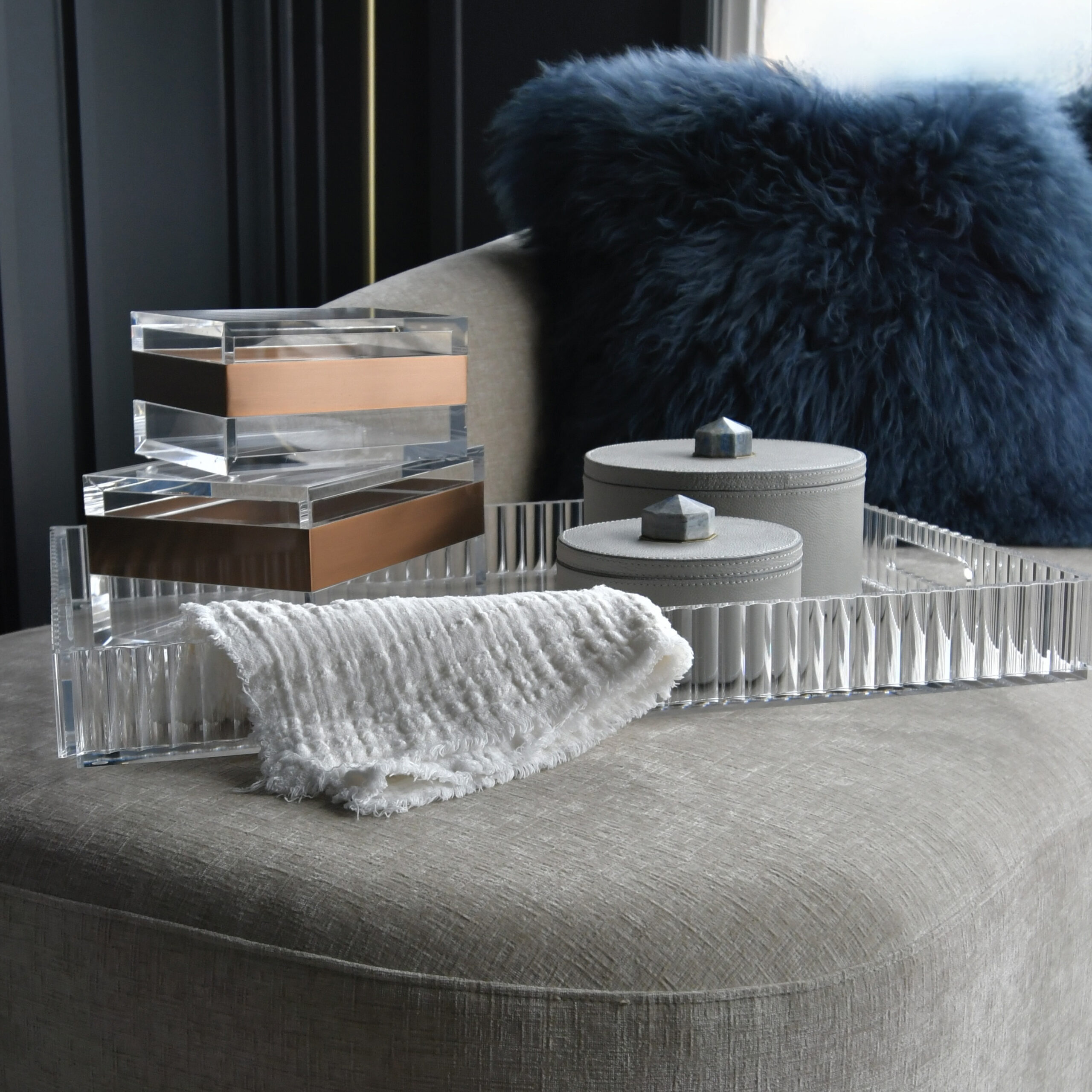
“The thickness of the acrylic gives them substance, while the hand-polished edges enhance their clarity and interaction with light,” Jessica Allen said of Luho Design House’s Fiona trays.
Allen, Luho’s founder, approaches the smaller object with the same questions about material and use that she brings from architecture. A tray’s edge and thickness become decisions about how someone will experience the finished piece.
“Architecture taught me to think about proportion, materiality, form, and function,” she said in an email interview.
The clear acrylic Fiona tray has vertical fluting along its sides. Allen connects that detail to traditional design while describing the acrylic as a way to give it a different character.
“It’s about balancing visual elegance with a tactile quality that makes the pieces feel special in everyday use,” she said.
Her questions continue beyond the surface. When choosing something for a home or as a gift, Allen wants someone to consider its use and the work behind it.
“Consider how something will be used, the artistry and craftsmanship behind it, and the connection it might create,” she said. “A beautiful game brings people together, while a decorative box can hold something meaningful.”
For the Fiona tray, that interest in daily use begins with the physical object: the substance of the acrylic, the polished edge and the repeated fluting someone can see and handle. “I love objects that become part of someone’s everyday life!” Allen said.