A mug handle can be too small for the fingers or too large to balance comfortably. For Catherine Batacan, that small space is one of the most demanding parts of making a cup for everyday use.
“However, the element I spend the most time perfecting is the handle,” she wrote in an email interview. “It is fundamental to comfort—if it is too small, fingers feel cramped, but if it is too spacious, balancing the weight of the liquid strains the wrist.”
The potter and product designer behind Batacan Ceramics approaches the mug as something a person will use repeatedly. Weight, the feel of the lip and the way the shape sits in the hands all have to work alongside the glaze.
“My design approach centers on form following function to solve daily human needs through beautiful, functional ceramics,” Batacan wrote.
Getting there means repeating decisions before the finished piece reaches anyone’s cupboard. Batacan described product design and ceramics as sharing a process of discovery, prototyping, feedback and refinement.
“Studio testing helps mitigate much of the material’s unpredictability,” she wrote.
Testing includes details that may disappear into a pot that works: the gallery inside a jar has to meet its lid, and a particular clay’s moisture needs and strength affect what can be made from it. Batacan said different clays also react differently with glazes.
The kiln leaves another kind of uncertainty. In her account, weather, the density of the load and placement affect a firing, and she gives up direct control when the kiln closes.
“Though initially frustrating, relinquishing absolute perfection has been liberating, teaching me to embrace unpredictability and imperfection,” she wrote.
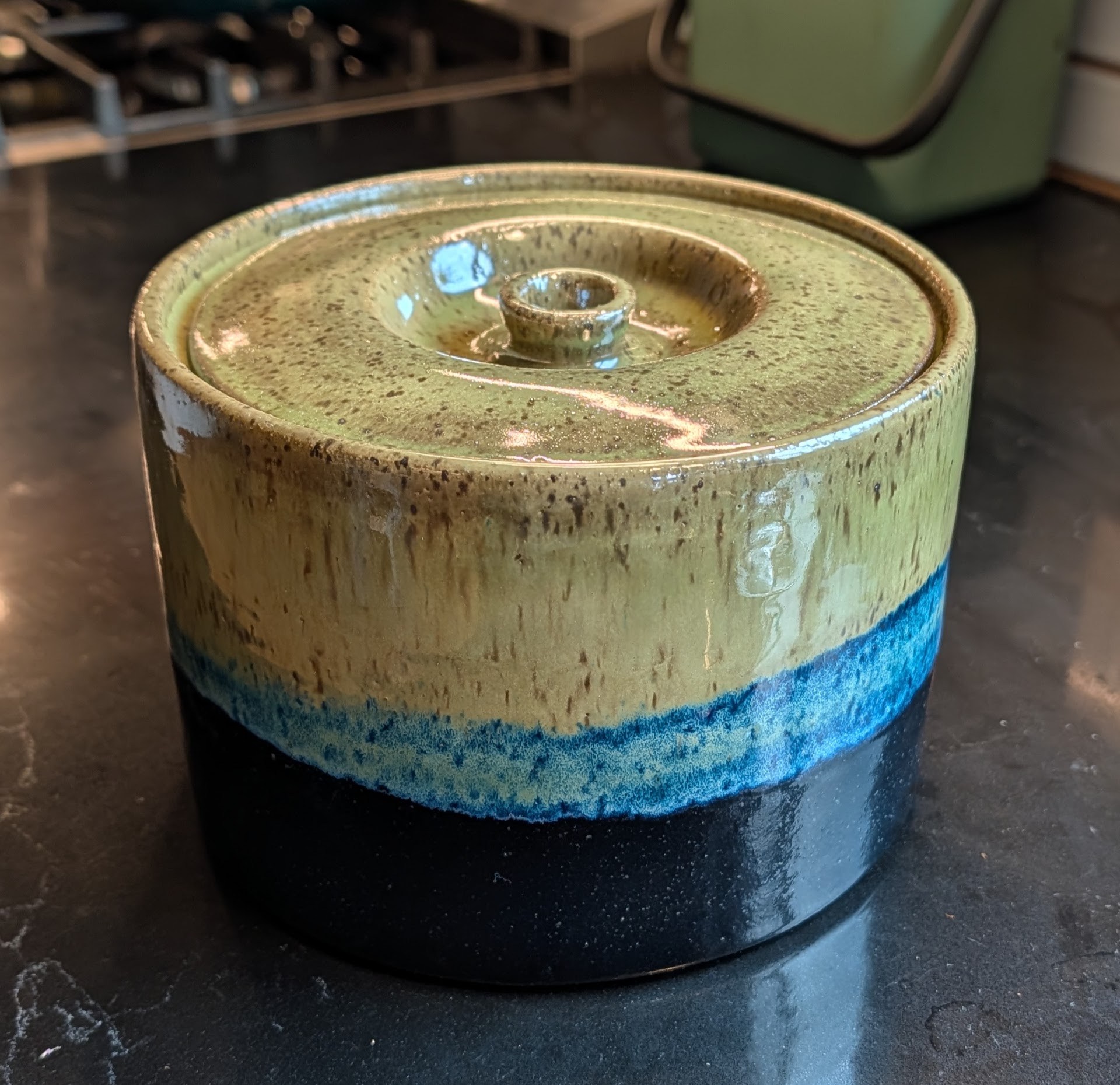
That surprise can become part of the surface. Asked about layered glazes, Batacan described putting a green glaze called Seaweed above a dark glaze called Obsidian.
“For instance, pairing a green glaze like Seaweed at the top with a dark Obsidian glaze at the bottom produces a dramatic transformation in the kiln: where the two meet, they react to yield a vivid blue reminiscent of crashing ocean waves,” she wrote.
It’s her description of a particular glaze combination, not a promise that another pot or firing will reproduce it. The result gives her something to respond to after the testing and planning.
A mug still has to return to the person holding it. A surprising surface doesn’t settle the question of weight or the space inside a handle.
Batacan describes choosing glazes that might turn a cup into someone’s favorite daily mug, but she spends the most time on the part that lets them lift it. That is where a design intended for everyday life has to earn its place.