The Rhythm & Ritual maker explains the work behind a sweeper and the patience she brings to teaching it.
A broom beautiful enough to hang on the wall still has a floor to sweep. Emileigh Zola, the maker behind Rhythm & Ritual, regularly hears that her brooms are too pretty to use, and her answer begins with the care that goes into making them.
In an email interview with Debjo’s Boutique, Zola described a sweeper’s making, from gathering its handle in winter to stitching it flat. Following that work gives the broom’s beauty a practical explanation: each decision also has to serve the person who will hold it.
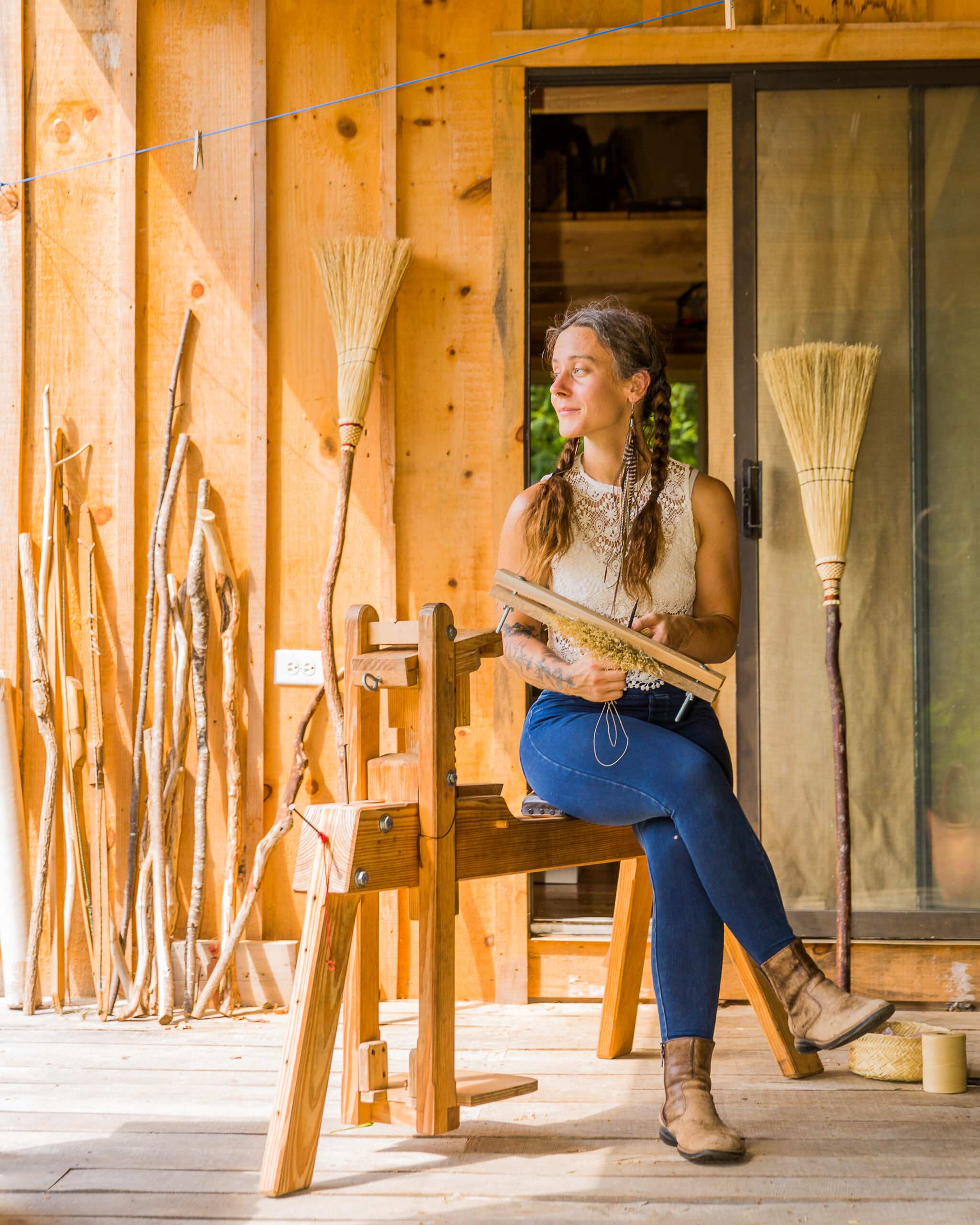
The class she hadn’t planned to take
“I like to say that broommaking found me.” In 2014, Zola wrote, eight months pregnant with her second child, she had a scholarship for a felt-making class at the John C. Campbell Folk School in Brasstown, North Carolina.
When that class was canceled because of low enrollment, she says, she still wanted to go and learn something. There was room in broommaking, a craft she hadn’t considered.
She loved working with broomcorn, which Rhythm & Ritual’s FAQ identifies as a variety of sorghum, and finding ways to bring natural materials into something useful at home. Sweeping with the finished broom made her want to keep going.
A year later, Zola says, she found a bundle of broomcorn in the attic of her family’s old farmhouse in rural West Virginia. Her father remembered her great-grandmother growing it and making her own brooms; what had started as a substitute class now had a family connection.
A handle has to feel right
For the sweeper she described, the handle begins with a winter trip to a mountain hollow where she once raised her children. Zola selects saplings she considers crowded or in the trail, removes the smaller branches, and stores the wood in her workshop to dry until summer.
Then she smooths a handle with a drawknife while it rests on a shaving horse. As she put it, “I consider the way this stick will feel in someone’s hands while they are sweeping.”
That concern follows the handle into the rest of the broom. She weighs out two lengths of broomcorn for its inner and outer layers; for this sweeper, she says, the crop was grown and processed in Mexico.
A “broom horse” keeps tension on the string while she binds the layers to the handle. She splits selected broomcorn stems, soaks them for hours, and weaves a cap over the binding.
She then flattens the broom in a homemade clamp and stitches it with a locally blacksmithed needle. The handle has to feel right in a hand, and the fibers have to stay together when the broom is used.
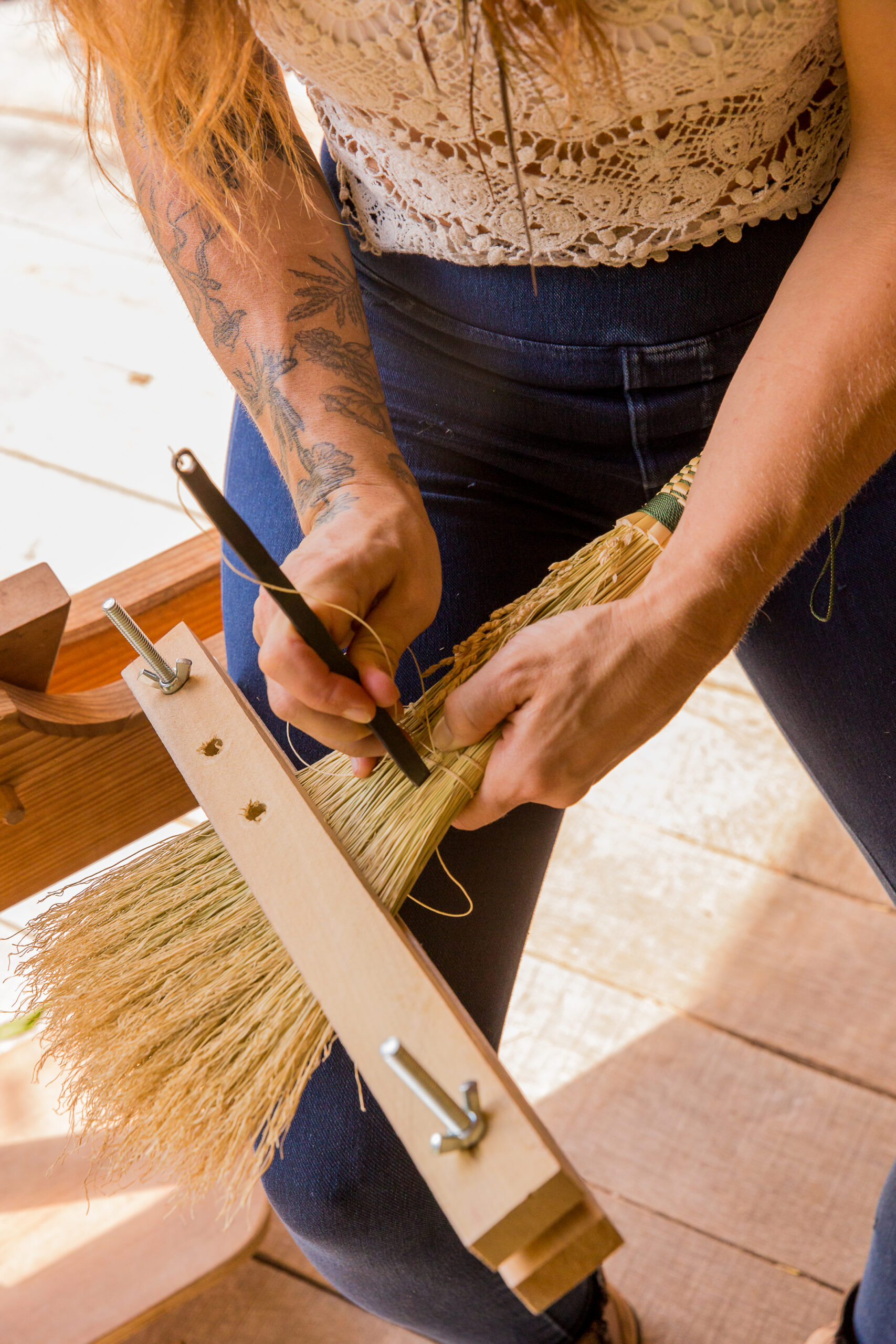
A hole and leather cord give it a way to hang, and a homemade beeswax-and-oil finish brings out the wood’s colors. Hanging the broom also helps keep the bristles straight, Zola says, so the place on the wall is part of caring for a tool she intends for daily sweeping.
Her FAQ makes a useful distinction for anyone choosing one: almost all of her brooms are intended for use, while the pieces she makes for decoration are labeled “art” brooms. Check the individual piece’s description, especially if you want it to do more than look good.
Allowing yourself to begin
When Debjo asked where she would start a woman trying broommaking at 50 or beyond, Zola pointed to her prerecorded beginner course. She also explained why needing a step shown more than once is familiar to her.
Zola describes herself as a slow learner who needs repeated explanations and visuals, and says that experience helps her relate to students. Her course’s close views and different camera angles are meant to make the handwork easier to follow.
The course listing includes whisk brooms and a simple besom, a broom tied onto a handle. Materials are sold separately, so look through the course and its supply list together before deciding what you need.
The course is the starting point she recommends. If you want to begin with one small project, ask which lesson she would choose and which materials you’ll need for it.
Her encouragement is more specific than expecting a perfect broom. Set an intention before starting, she advises, and return to it when a difficult step interrupts the pleasure of making.
“And ALLOW yourself to be a beginner,” she wrote. “It’s okay to not "get it right" the first go around.”
That leaves room for a broom to matter before it looks exactly as you hoped. If the reason for learning is to enjoy making something you can use, the next step is to find a lesson you can follow, give yourself time to repeat it, and eventually put the broom to work.
Explore Rhythm & Ritual’s online broommaking course and the materials it calls for.