Jewelry / care by material
How to care for silver and pearls without mixing up the cleaners
A silver clasp doesn’t make a pearl necklace a silver-cleaner project. Start with what the whole piece can tolerate.
In this guide
The silver chain looks dull, the pearl beside it needs a wipe, and the bottle under the sink says jewelry cleaner. That label leaves out the part that matters: which jewelry?
Start with the whole piece, including its stones, finish and fastenings. A few minutes spent sorting those out can save you from trying to polish a surface that was supposed to stay exactly as it was.
A useful place to start
- Identify the metal, stones and finish before choosing a cleaner.
- Wipe pearls with a separate, clean, very soft cloth after wear.
- Use silver polish only where the whole piece and finish allow it.
- Dry thoroughly and store pearls separately from silver-care supplies.
Check the whole piece before opening a cleaner
Set the jewelry on a clean, folded towel and look at the front, back and clasp. Separate plain silver from pieces with pearls, stones, enamel, glued decorations or a finish you can’t identify.
A silver-colored surface does not establish sterling silver, and a dark recess may be part of the design. Look for the original description or ask the seller before deciding that every dark area needs removing.
For an inherited or unfamiliar piece, take a few clear photos and ask a jeweler what it is and how to care for it. GIA’s general care guidance explains why treatments and delicate construction change the cleaning method; the strongest material in a necklace doesn’t set the rules for everything attached to it.
Give pearls a clean, plain cloth
For routine pearl care, GIA recommends a very soft, clean cloth after each wearing. Use a separate cloth that has never held silver polish or another cleaning treatment, and move it gently around each pearl rather than scrubbing.
That plain cloth can already be in your cupboard. Keep it clean and put it somewhere distinct from the treated polishing cloth, because two folded squares can look remarkably alike when you’re putting things away.
GIA permits warm, soapy water for occasional pearl cleaning, with the string completely dry before wearing. If the strand has fragile thread, unknown treatments or a mixed setting, get specific advice before wetting it.
Keep pearls out of steam and ultrasonic cleaners. Skip acidic mixtures and household-cleaner experiments; GIA identifies chemicals and acids as threats to the pearl’s surface, and a shiny silver clasp is a poor consolation for a damaged pearl.
Polish identified silver only where polishing belongs
For plain silver whose finish allows polishing, choose a product specifically labeled for silver and follow its directions. Work over the towel, support the piece and use a light touch rather than pulling a fine chain through a tightly gripped cloth.
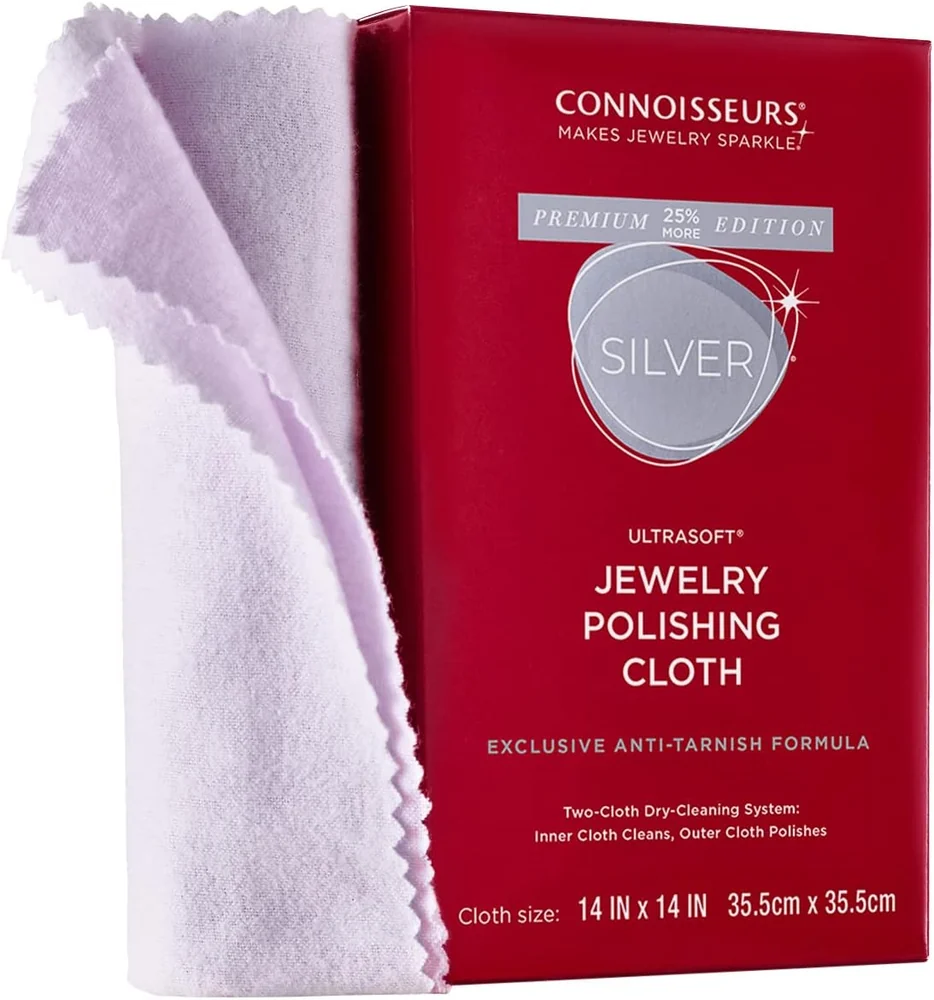
The Connoisseurs cloth uses a treated inner layer followed by an outer buffing layer. That is a silver-polishing method, not permission to rub the treated surface across pearls or every stone on a brooch.
If silver and pearls share a setting, avoid treating the entire piece as one polishing job. Ask a jeweler how to reach the metal safely, and leave intentional darkening or an unknown coating alone until you know what you’re looking at.
Let the jewelry dry before it goes away
Keep a damp pearl strand flat on a clean towel until both pearls and thread are fully dry. GIA notes that wet silk can stretch, so this is a good moment to give the necklace a quiet afternoon instead of hanging it from a hook.
While it rests, look for stretched spaces between pearls, worn thread, a clasp that doesn’t close firmly or a stone that appears loose. Don’t tug or probe to test it; set the piece aside for a jeweler if something needs attention.
GIA’s pearl-care FAQ describes how silk can darken, stretch or wear thin. Cleaning won’t repair that thread.
Give silver and pearls different storage
GIA recommends an anti-tarnish bag or cloth for sterling silver. Store clean, dry pieces separately so a pendant’s edge isn’t resting against another piece, even when several pouches share one drawer.
The Hagerty bag below is optional roomy storage for silver, and its manufacturer lists clean, polished silver among its intended contents. It has no individual jewelry compartments, so putting several loose necklaces inside would undo your careful sorting.
Pearls belong in their own soft pouch or case, away from sharp edges and hot, overly dry conditions. Don’t assume treated silver-storage fabric is pearl storage, too.
Keep only the supplies you understand
A labeled plain cloth, a suitable silver cloth and separate storage cover a lot of ordinary care. Keep each product’s packaging so you can check its limits later, and replace a questionable guess with a question to the jeweler.
Start with one piece you can identify confidently. If the pearl strand needs only its after-wear wipe and the silver pendant needs professional advice, those are two different successful decisions.
A few options for the job.
Use what you already have if it does the job. These are alternatives to compare, not a list of things you need to buy.
Connoisseurs Premium Edition Silver Polishing Cloth
14 x 14 inches; silver formula
Why consider it: A dry two-cloth polishing option for identified silver when its finish and attached materials allow polishing.
Keep in mind: The treated cloth is not the plain cloth used on pearls. Keep it off pearls, stones and unknown or deliberately darkened finishes; get material-specific advice first.
Check price on Amazon ↗Paid link · check current seller, variant, price and availability.
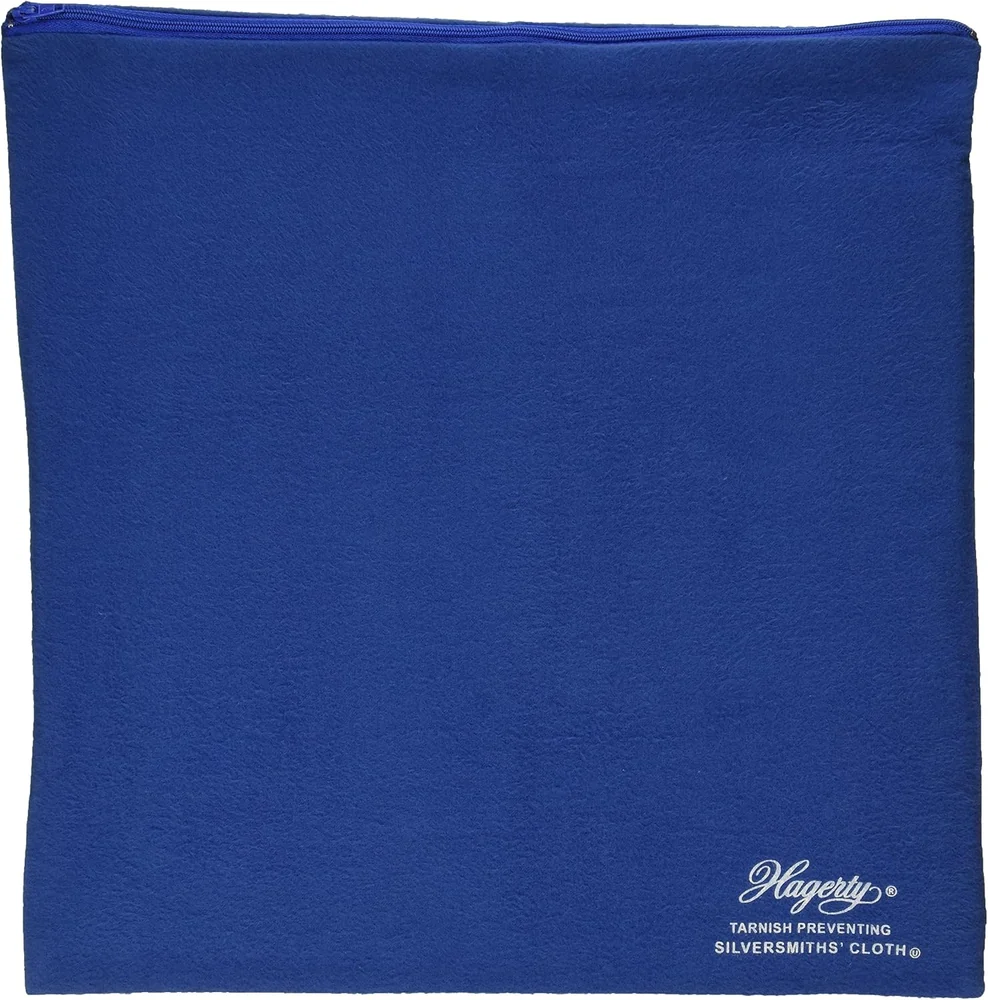
Hagerty Silver Keeper Bag
9 x 12 inches, blue, one bag
Why consider it: Optional treated storage for clean, polished silver; useful when several pieces need more room than a small pouch.
Keep in mind: This is a roomy holloware bag, not divided jewelry storage. Separate pieces inside and do not assume the treated cloth suits pearls or mixed-material pieces.
Check price on Amazon ↗Paid link · check current seller, variant, price and availability.